
Restikon Foundry
Restikon Foundry is a village builder and colony simulation game focused on individual villagers rather than abstract systems. Progress from a hunter-gatherer outpost all the way to an industrialized colony with multiple specialized towns connected by a growing logistics network.
At its core, the game explores a simple idea: a settlement exists because its people act. Villagers gather resources, carry them through the world, store them, and use them to build and survive. If those chains break — if food is not delivered, if firewood is not hauled, or if storage fills up — the settlement begins to fail. The settlement must be organized; systems only work if the villagers make them work, and the player is responsible for holding the entire colony together.
The simulation is built around individually simulated villagers. Each villager acts as an independent agent, moving through the world and performing the actual work that keeps the settlement functioning. Resources are not just numbers, but physical goods that must be gathered, transported, stored, fabricated, refined, traded, and consumed. Needs such as hunger and warmth are not background statistics, but pressures that directly shape individual behavior. Logistics, storage, and the environment define what is possible at any given moment, and expansion emerges from those constraints rather than from scripted progression.
Expansion is crucial because territories and biomes differ significantly from one another. One territory may be fertile and ideal for food production, while another may offer valuable minerals but little or no opportunity to produce food. This creates both a challenge and an opportunity: logistics and storage must be carefully orchestrated to support expansion.
The settlement is therefore not just a single village, but a network of territorial hubs connected through logistics and need-based resource exchange. As the colony grows, maintaining these connections becomes increasingly important.
Progress is achieved through organic growth and environmental development. The settlement begins as a simple, remote outpost that produces and consumes supplies and consumer goods. Food, tools, backpacks, and clothing form the foundation for sustainability and logistics. The soil holds various minerals and riches that can be exploited. Each village can be developed to meet the needs of a growing population.
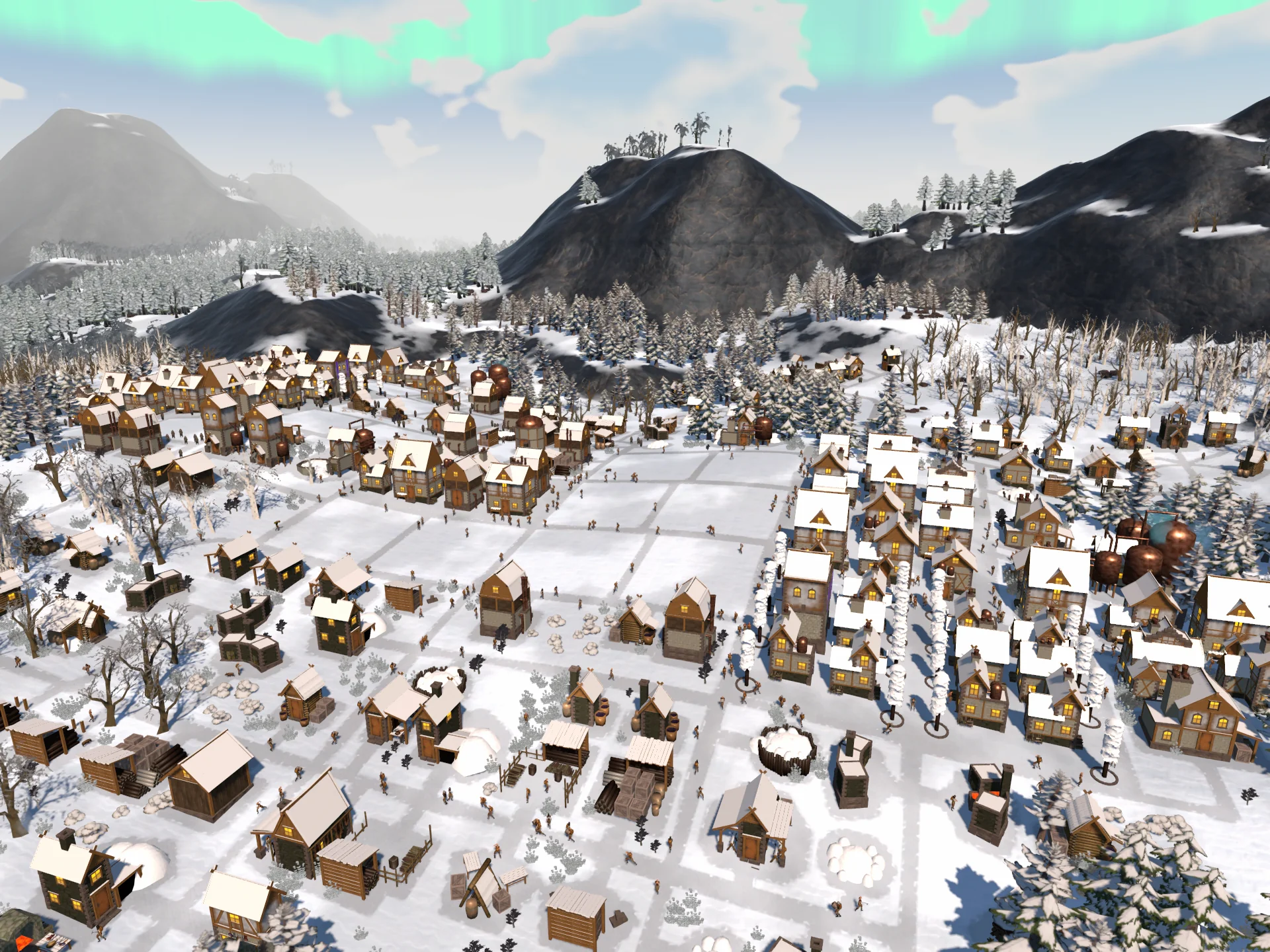
Seasons play a central role in the game. They are not merely visual changes, but shifts in how the settlement operates. Resource availability, movement patterns, and survival pressures change over time, forcing the colony to adapt or fail.
The game is built around expansion, management, optimization, and resolving issues that emerge as the settlement grows. Everything has consequences. The placement of production buildings and warehouses affects the efficiency of logistics. Expansion increases demand for labor and supplies, while greater distances make critical resources harder to distribute. A shortage of workers in one place can disrupt production elsewhere, and poor preparation for seasonal shortages can put an otherwise stable settlement under pressure. Expanding therefore means not only claiming new territory, but considering what resources are available, what the new settlement will depend on, and whether the existing network can support it.
Key concepts
- Individually simulated villagers
- Interdependent territorial settlements
- Seasonal pressures and adaptation
- Production and supply chain management & optimization
- Procedurally generated environment offering plenty of space for construction and expansion
- Partially procedurally generated buildings to avoid a monotonous appearance
- Two different building styles: freeform and snapping
- 70+ resources and goods
- 50+ buildings
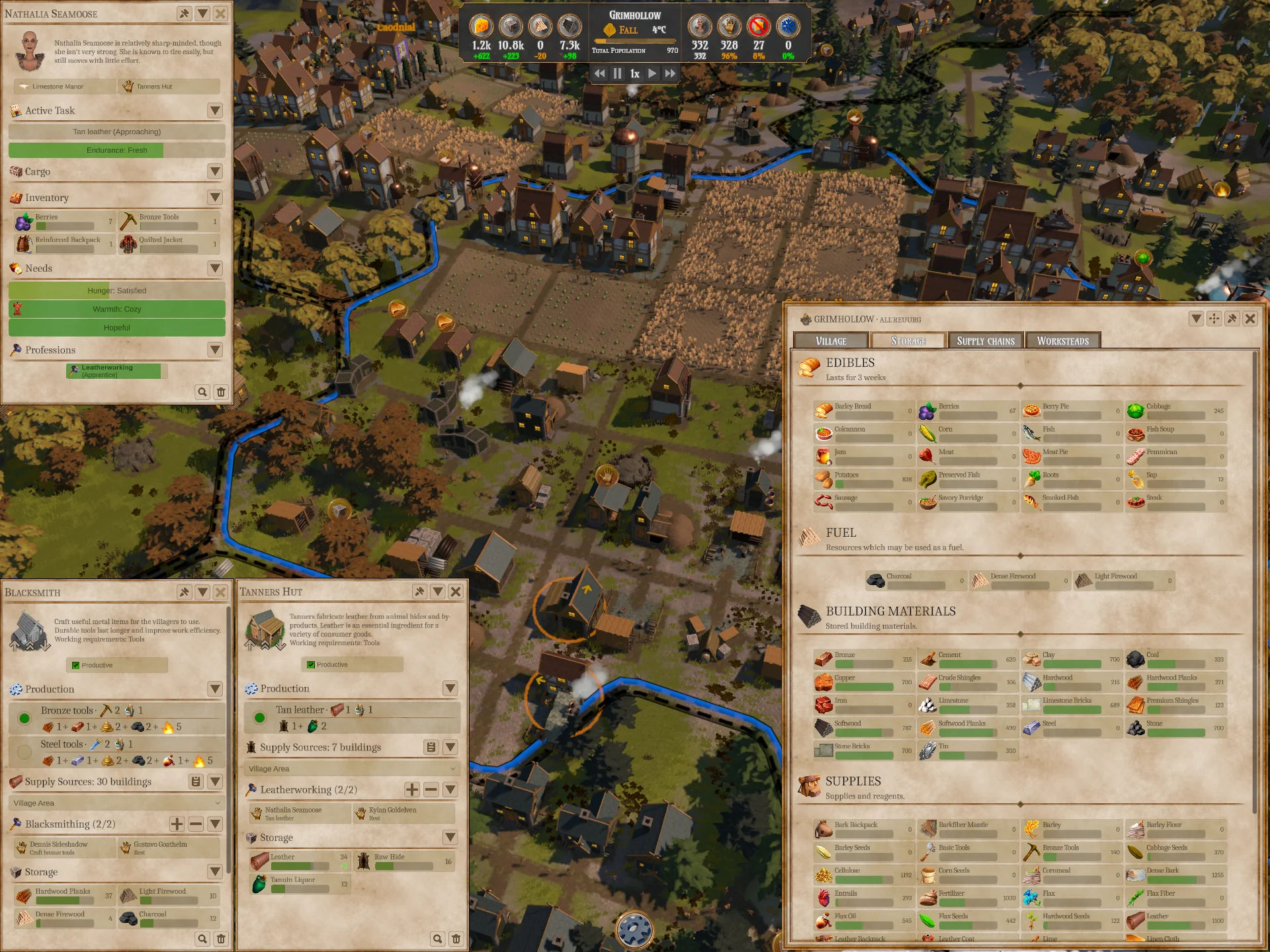
Screenshots
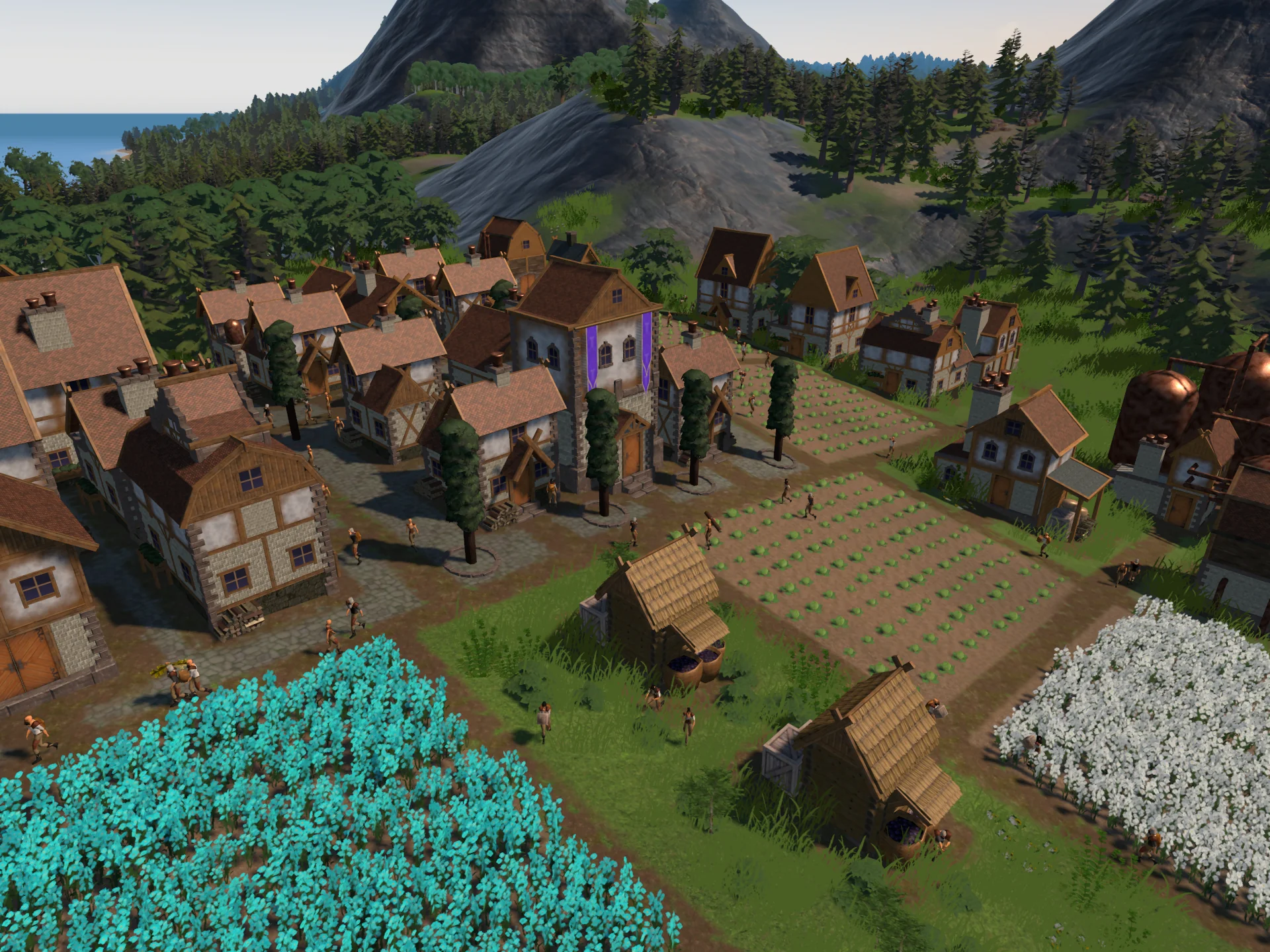
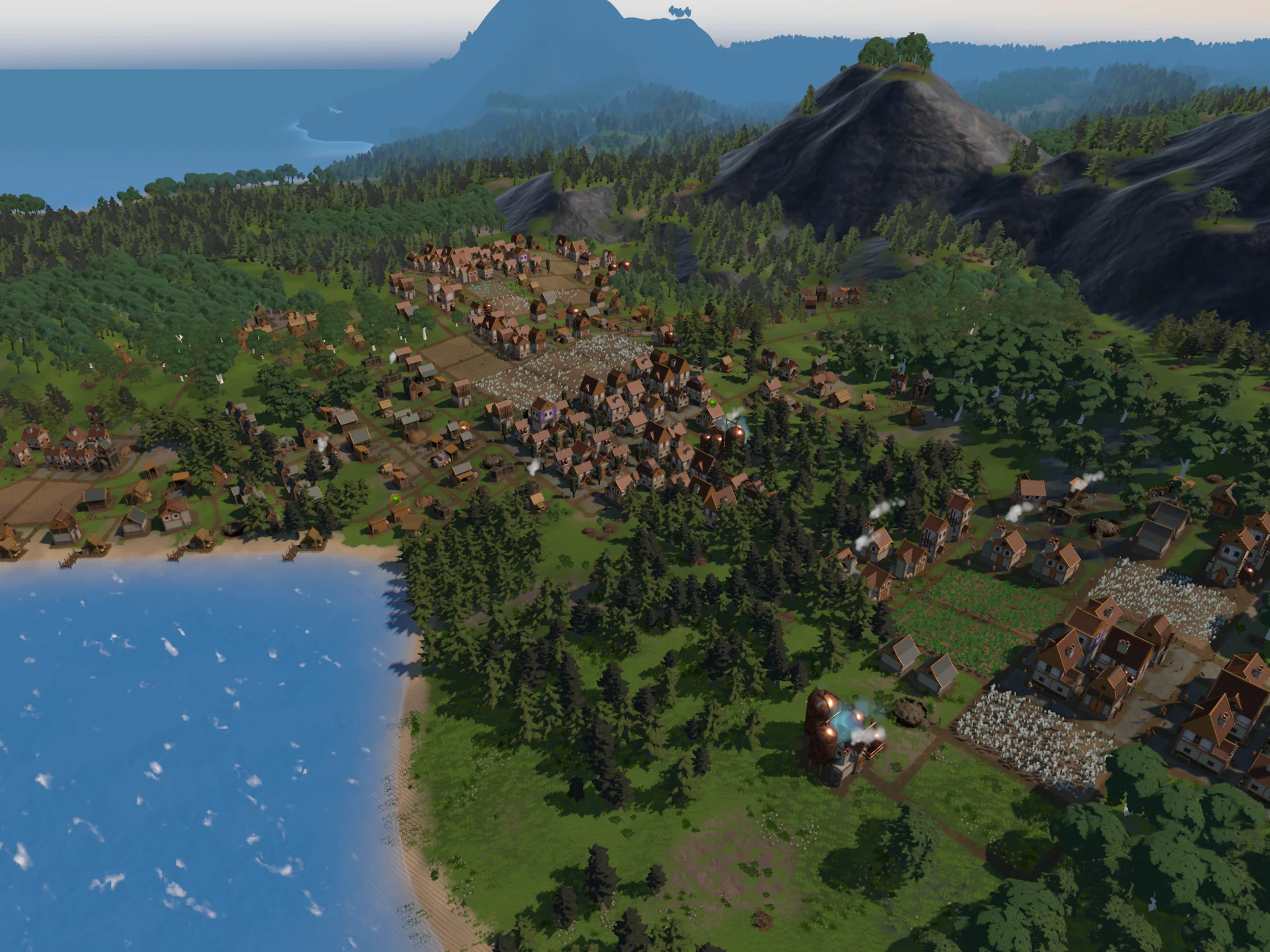
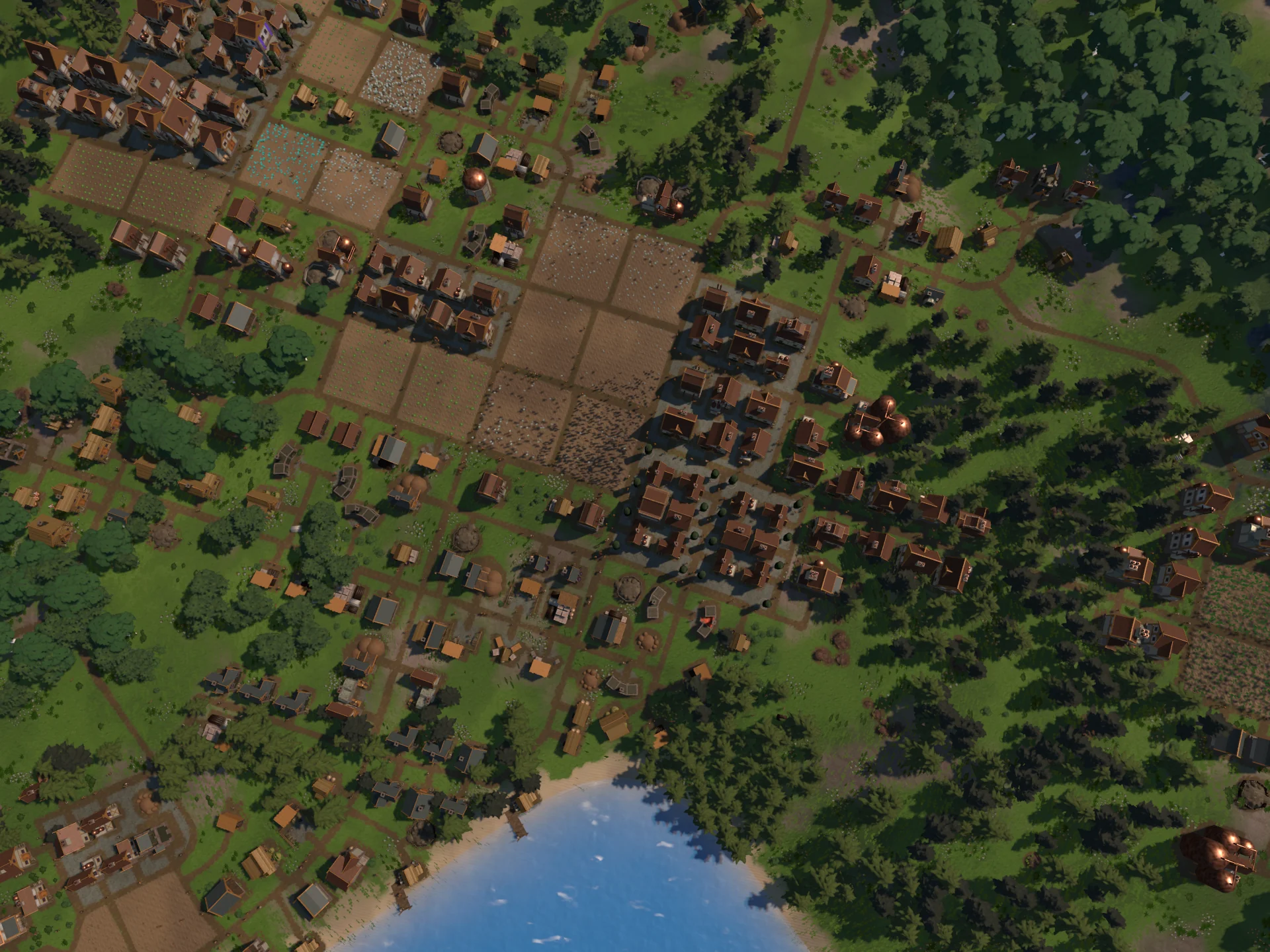
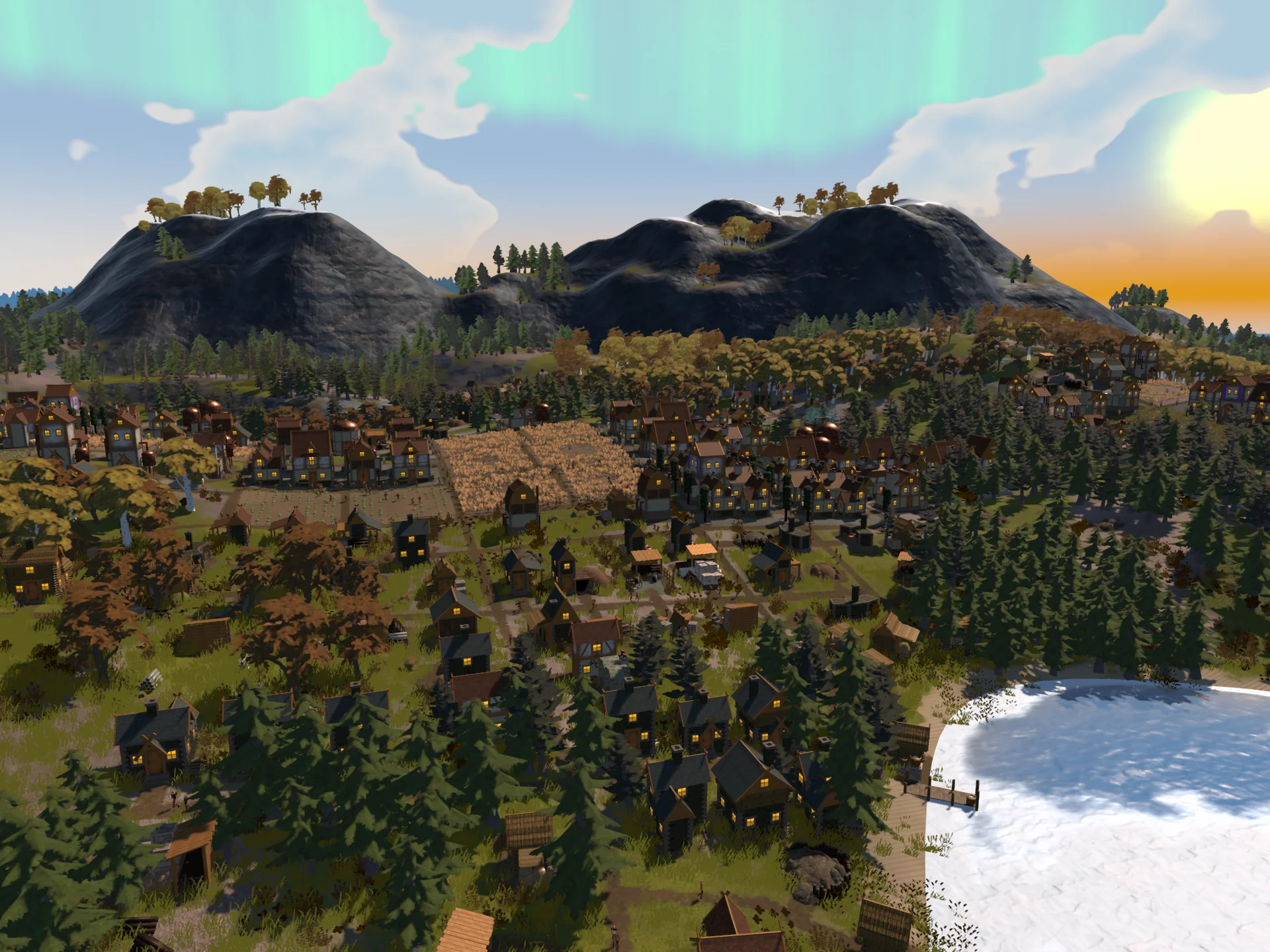
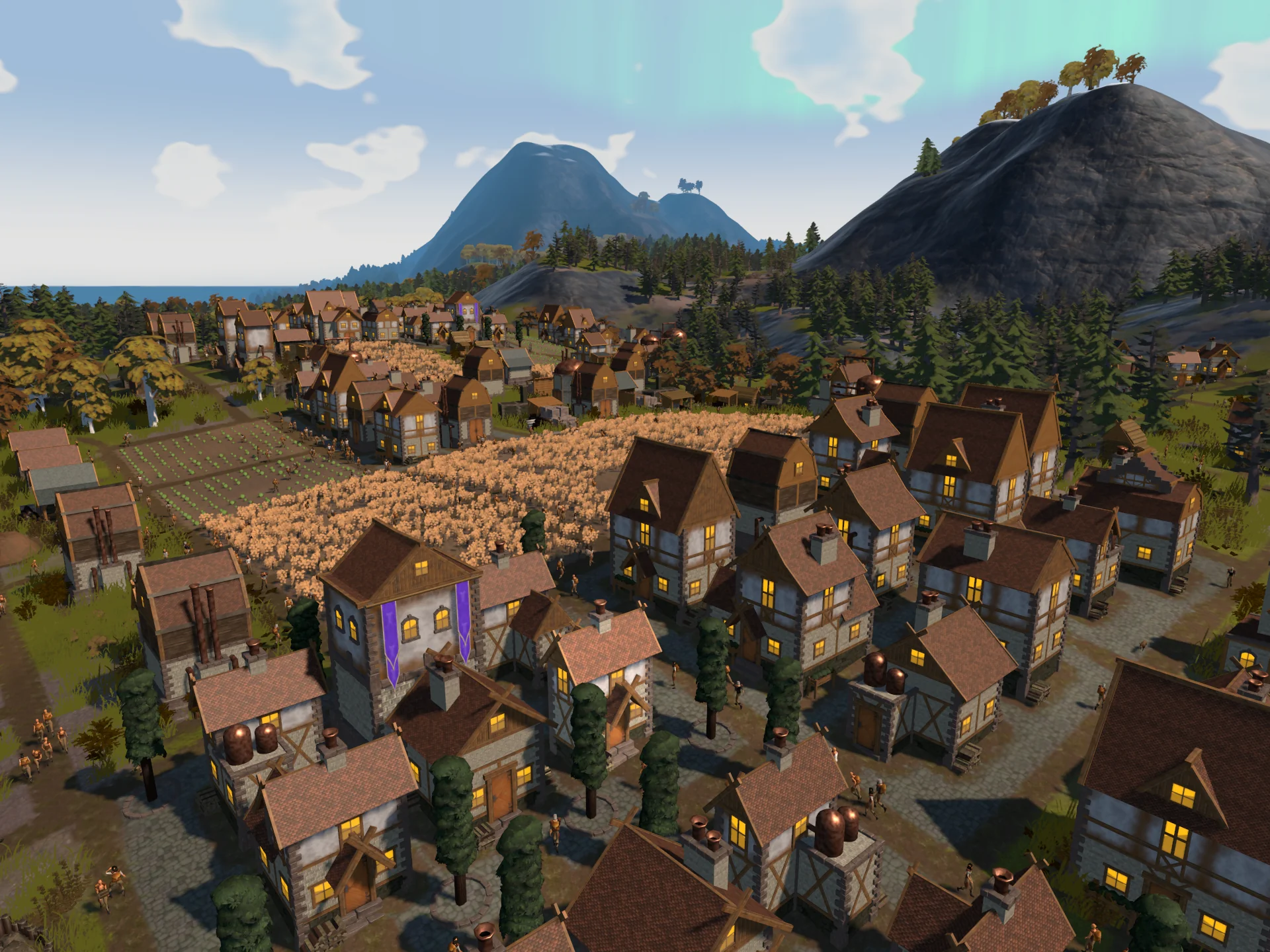
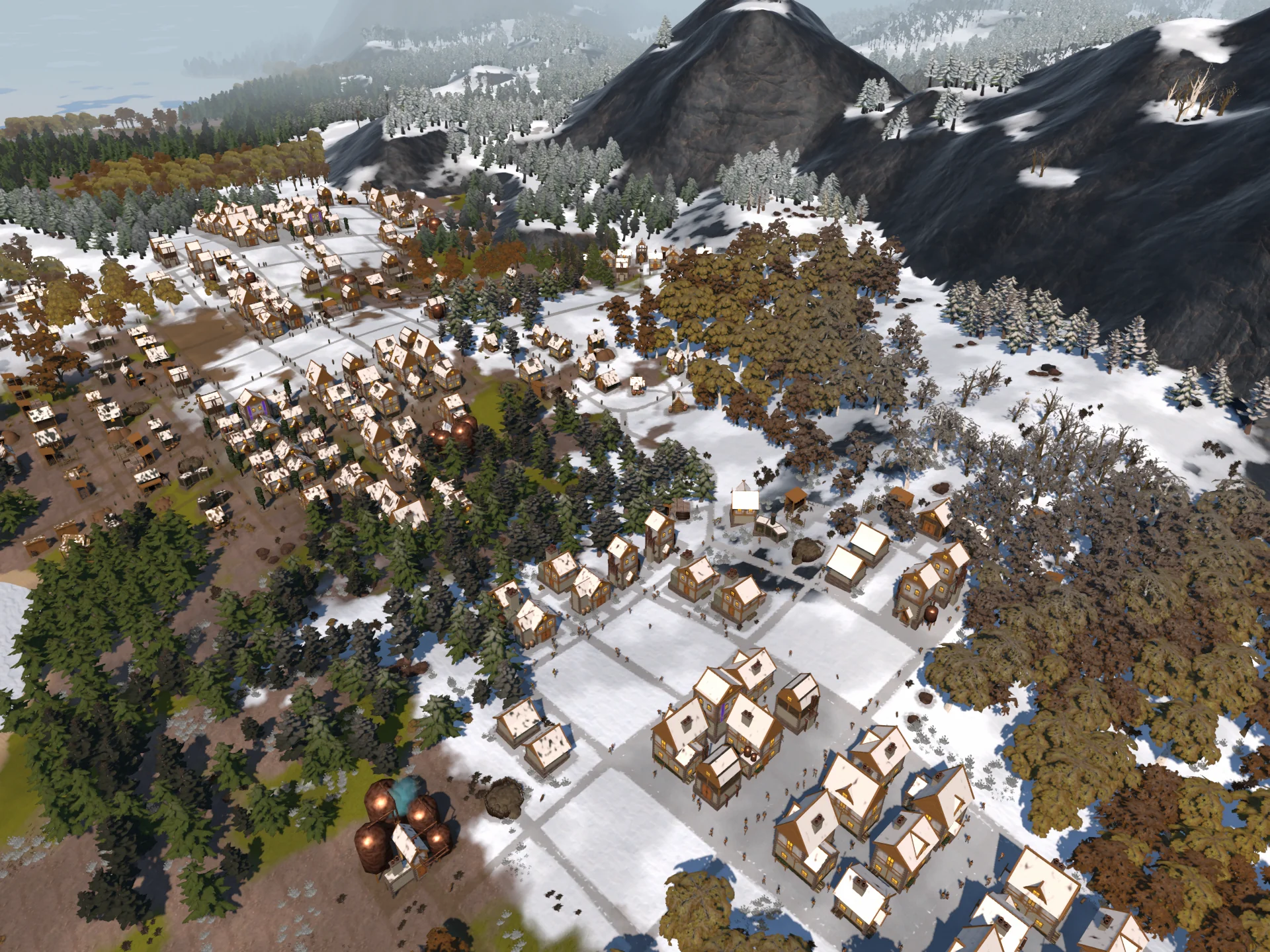
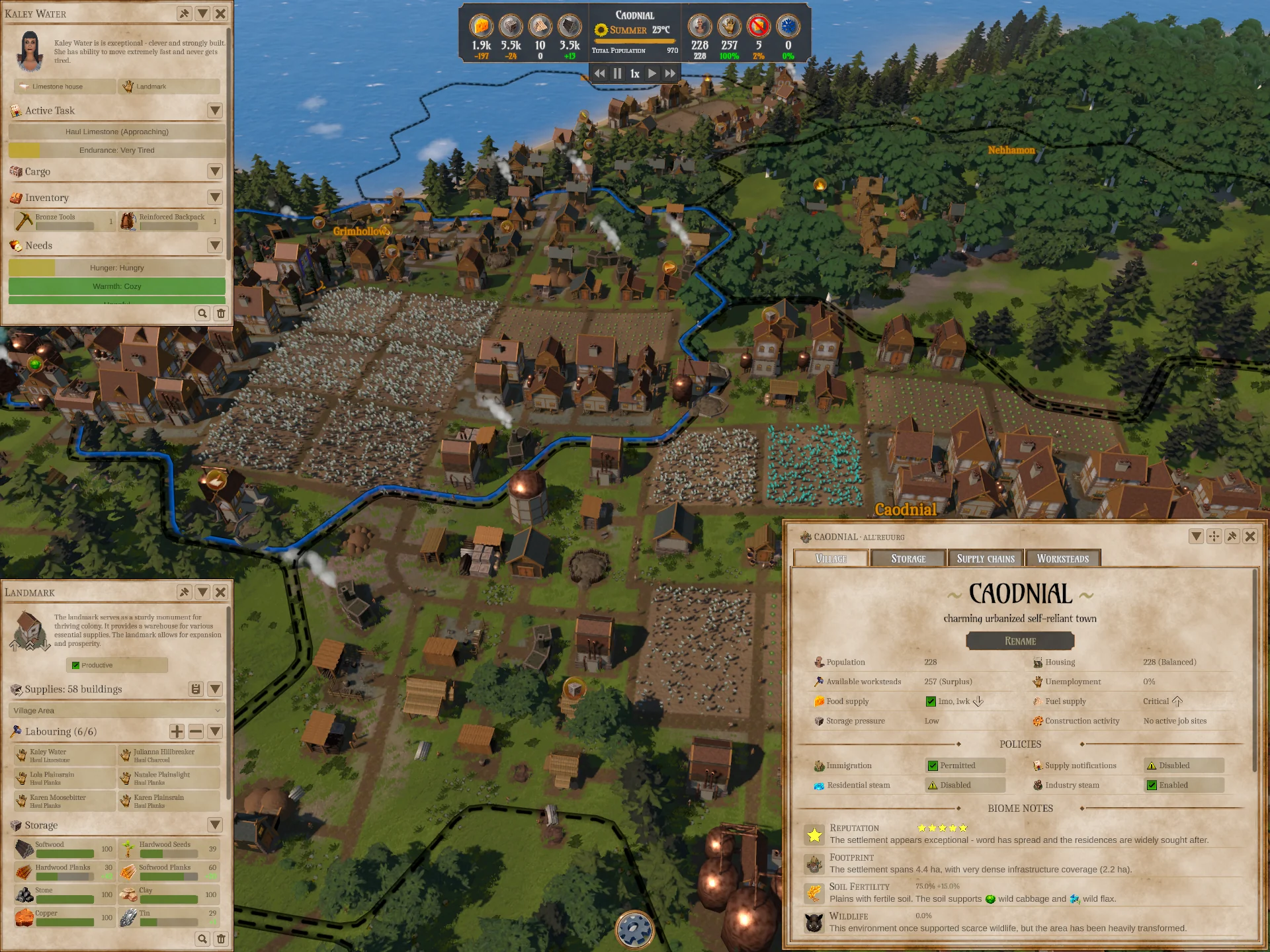
Development screenshots from Restikon Foundry.
About the Developer
WithFinity is an independent, one-man workshop based in Finland, built mainly around coding. Its primary focus is game development, but it also works across netcode, user interfaces, and backend systems.